

Closed Campuses, New Beginnings: How North Texas Students Are Adapting After District Closures

Share
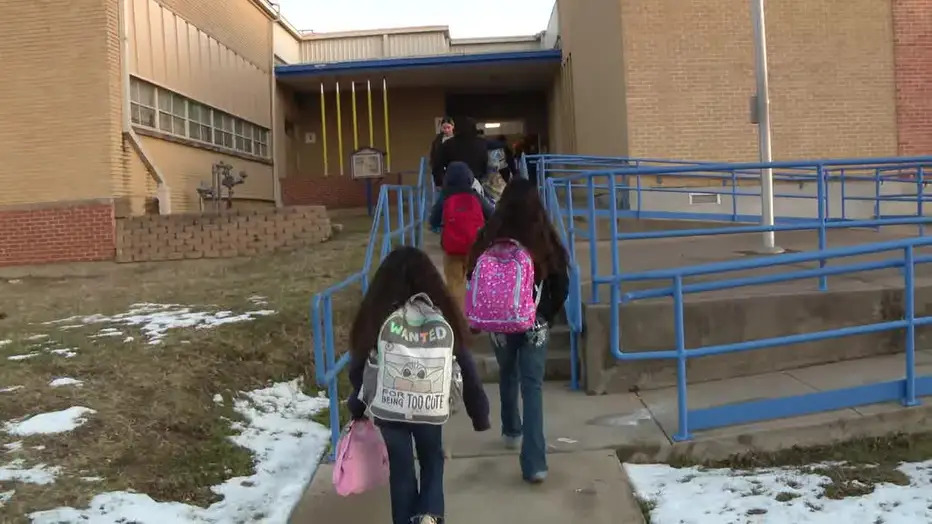
Under the glow of hallway lights on a recent Thursday evening, hundreds of parents crowded around classroom assignments taped to the entry columns of Delmas F. Morton Elementary School in Grand Prairie. Teachers and staff navigated dense crowds, guiding eager families toward classrooms for the annual district-wide “Sneak-A-Peek” open house.
While back-to-school night always brings a baseline level of excitement, the energy at Morton Elementary was uniquely intense this year. Following the recent closure of Travis World Language Academy, nearly 200 displaced students are making Morton their new academic home starting this fall.
Across the Dallas-Fort Worth metroplex, thousands of families are navigating similar transitions. Faced with declining enrollment and tightening budgets, multiple North Texas school districts have voted to consolidate campuses, forcing communities to adapt to new environments.
Easing the Transition at Morton Elementary
Grand Prairie Independent School District (GPISD) shuttered Travis World Language Academy over the summer, dispersing its nearly 700 enrolled students across the district. Morton Elementary—which previously served roughly 550 students from pre-K through fifth grade—is taking in a significant portion of that population.
To accommodate the shift, Morton is expanding its grade structure. The campus will add sixth grade this year, followed by seventh grade next year and eighth grade in the 2028–29 academic year.
Principal Rosa Avendaño spent months preparing for the influx, hosting informational sessions to answer parental concerns regarding campus culture, academic offerings, and volunteer opportunities.
“Our main focus in these early weeks is relationship building,” Avendaño noted, adding that teachers are pairing incoming students with student buddies to help them navigate the halls.
The transition has been softened by key similarities between the two schools:
- Geographic Proximity: Located just 1.5 miles apart, separated by State Highway 180.
- Demographics: Both campuses serve predominantly Hispanic student bodies with high populations of English language learners.
- Staff Continuity: Roughly a dozen former Travis educators and support staff—including counselors and art teachers—transferred to Morton alongside the students.
Regional School Closures Driven by Enrollment and Fiscal Pressures
Grand Prairie is far from alone in consolidating facilities. Declining birth rates and shifting regional demographics have prompted several North Texas districts to shutter under-enrolled schools in order to balance operating budgets:
| School District | Campuses Closed | Combined Student Impact |
|---|---|---|
| Grapevine-Colleyville ISD | 2 Elementary Schools (Dove, Bransford) | ~850 Students |
| McKinney ISD | 3 Elementary Schools (Eddins, McNeil, Wolford) | ~1,100 Students |
| Fort Worth ISD | 7 Campuses (With more planned over 3 years) | Thousands |
| Grand Prairie ISD | 1 Academy (Travis World Language) | ~700 Students |
District leaders consistently point to financial viability as the primary driver behind consolidations. Small, under-populated campuses present high operational costs per student, making it difficult to fund comprehensive fine arts, athletic programs, and specialized staffing.
Where the Savings Actually Come From
While many assume closing a building saves vast sums in facility upkeep, economic experts point out that the real cost reductions lie elsewhere.
Marguerite Roza, director of the Edunomics Lab at Georgetown University, explains that property maintenance savings are often minimal because districts rarely sell closed facilities immediately due to legal and market constraints.
Instead, financial relief comes through workforce management. Merging two small campuses into one larger facility allows a district to streamline administrative leadership and support roles—such as principals, nurses, and office staff—reducing overhead through natural attrition or staff reassignments without sacrificing classroom teacher ratios.
How Neighboring Districts Are Managing Hand-offs
Districts across North Texas have spent months attempting to minimize disruptions for affected families:
McKinney ISD
After shuttering three elementary schools in the southwestern corridor of the district, McKinney administrators organized spring mixer events to help displaced families meet their new teachers and administrators well before the fall term.
Grapevine-Colleyville ISD
To provide continuity, GCISD leadership reassigned outgoing elementary principals to head the receiving campuses. For example, former Dove Elementary Principal Heather Landrum will now lead Silver Lake Elementary, giving transferring students a familiar leadership face on day one.
Familiar Faces Bring Reassurance
For parents and students alike, the anxiety of a campus shutdown often melts away once familiar community members reappear in the new space.
During Morton’s open house, sixth-grader Nevaeh Rodriguez immediately spotted her former Travis art teacher, Sonia Torres, assisting families at the main entryway. Her father, José Rodriguez, acknowledged that initial news of the closure brought significant worry regarding scheduling and social isolation.
“The kids were worried about coming to a new campus where they wouldn’t know anyone,” Rodriguez said. “When they learned that many of their friends and favorite teachers would be at Morton, it brought that joy back. They knew they weren’t going to feel alone.”