

Texas Regulators Pause Hill Country Transmission Line Amid Landowner Outcry, Clear North Texas Route

Share
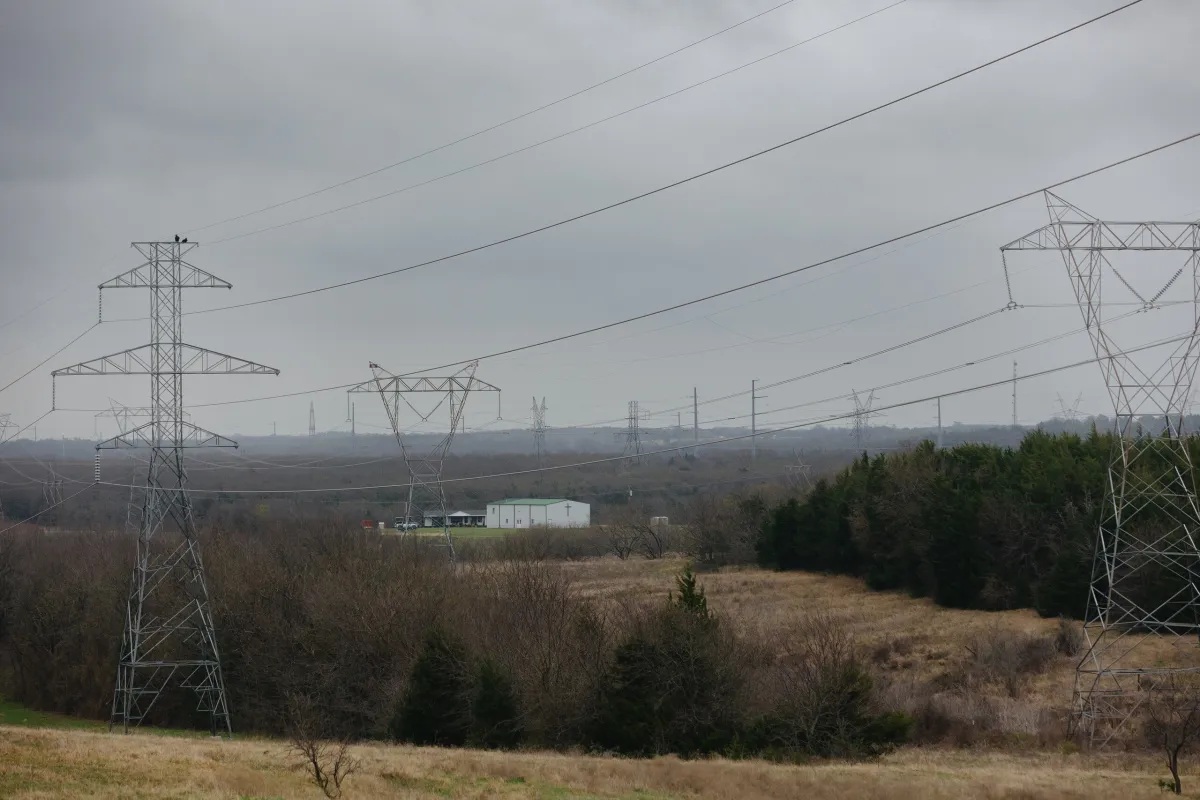
Facing mounting resistance from rural landowners and state lawmakers, Texas utility regulators have postponed a decision on a massive high-voltage transmission line through the Hill Country, while greenlighting the route for a separate major line across North Texas.
Both projects are central components of the state’s $33 billion Permian Basin Reliability Plan, an ambitious infrastructure initiative designed to construct three 765-kilovolt transmission corridors to feed expanding energy demands in West Texas.
During Friday’s meeting, the Public Utility Commission of Texas (PUC) approved applications from utility provider Oncor for two segments of a North Texas line: the 235-mile Dinosaur-Longshore route stretching from Somervell County to Howard County, and the 160-mile Longshore-Drill Hole route running from Howard County to the Culberson-Reeves county border. While commissioners approved the North Texas paths, they ordered Oncor to collaborate with affected property owners to implement route adjustments that prevent properties from being divided.
“I know we heard from some that the feeling is the participation isn’t meaningful,” PUC Chairman Thomas Gleeson said following the vote. “I want to tell everyone it is meaningful. Everyone who participates in this process and the people up here takes it seriously.”
Pushback Freezes Hill Country Route
Regulators took a different stance on the Howard-Solstice line, a proposed 370-mile route spearheaded by CPS Energy and American Electric Power (AEP) that would stretch from San Antonio through the Hill Country to Fort Stockton.
Dozens of residents and agricultural operators testified before the commission, arguing that the proposed corridor threatens pristine landscapes and cuts directly through family-owned properties rather than following existing utility paths.
Paul Tough, speaking on behalf of the Zachry Hughes Group, criticized the planners for running less than 4 miles—roughly 1%—of the 370-mile line alongside existing utility rights-of-way, calling the alignment insufficient.
In defense of the path, CPS Energy attorney Kirk Rasmussen cautioned that routing lines around individual property lines sharply escalates construction expenses.
“We were not deaf to their concerns during this process, but at some point we’re also trying to be stewards of the rates, of all [ERCOT] ratepayers,” Rasmussen said. “When these projects start to increase in costs significantly, we’re all going to pay for those.”
Fast-Tracked Permitting Under Fire
The controversy extends beyond property lines to the state’s expedited 180-day regulatory timetable for evaluating the reliability projects.
Louis Newsom of the Office of Public Utility Counsel noted that the aggressive schedule created significant hurdles for everyday citizens. Property owners were given as few as 17 days to provide direct testimony, resulting in hundreds of residents being dismissed from legal proceedings by administrative law judges for missing strict filing deadlines.
The backlash has triggered significant political intervention:
- Legislative Action: A coalition of 31 Texas House members petitioned the PUC to halt the reliability projects until lawmakers can reform the permitting process during the legislative session convening in January.
- Attorney General Intervention: Attorney General Ken Paxton filed a formal brief urging regulators to freeze the initiative until the Legislature conducts a comprehensive review next year.
Balancing Grid Reliability Against Land Rights
The ongoing dispute highlights a growing friction between statewide electrical reliability and local property rights.
While grassroots groups such as the Hill Country Preservation Coalition have questioned whether the transmission lines primarily serve industrial interests rather than residential consumers, energy advocates warn that delaying construction poses broad risks to the statewide grid.
Todd Staples, president of the Texas Oil & Gas Association, emphasized that West Texas power demand is surging due to the electrification of oil fields and overall industrial growth. Grid forecasters project regional peak power demand could more than quadruple by 2032.
“Reliability is what will keep us safe during the next winter storm,” Staples stated. “If West Texas cannot be reliable, the rest of the state has no chance for security.”
The PUC has deferred action on the Howard-Solstice route to a future open meeting while staff and commissioners review the docket. Regulatory reviews also remain pending for a third major transmission corridor comprising the Big Hill to Sand Lake and Bell County East to Big Hill segments.