

Judge Halts Dallas City Hall Vote After Legal Challenge Over Notice Violations

Share
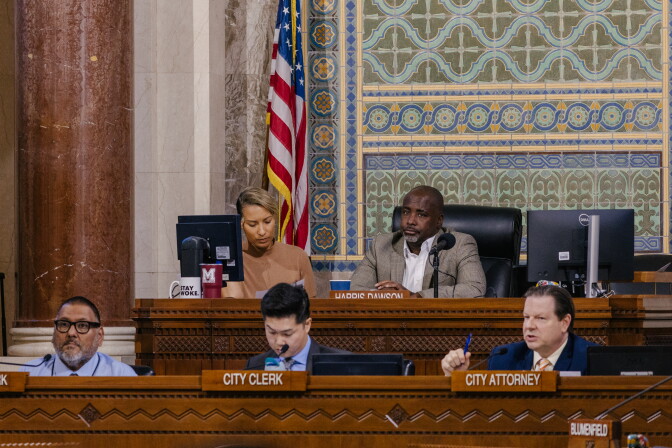
Dallas’ long-running debate over the future of its City Hall hit a major legal setback Tuesday after a judge blocked a planned City Council vote tied to relocation and redevelopment options.
State District Judge Eric Moyé ruled that the city failed to meet public notice requirements under the Texas Open Meetings Act, forcing officials to delay a high-stakes special council meeting that was scheduled for Wednesday. The meeting was expected to advance decisions on whether Dallas should invest hundreds of millions in repairing the aging City Hall or pursue relocation alternatives.
Judge cites inadequate and vague agenda items
During the hearing at the George L. Allen, Sr. Courts Building on June 9, 2026, Judge Moyé said several agenda items were too unclear for the public to fully understand their potential impact.
He found that two items related to relocating city operations lacked sufficient detail and did not clearly explain possible consequences for residents. A third item tied to redevelopment of the City Hall site was also deemed overly broad.
“There’s virtually nothing that the city could not do in this context, including sale of the property to anyone for any price,” Moyé said from the bench. Only one agenda item—authorizing repairs to City Hall—was ruled to have adequate notice. Despite that, the judge issued a temporary restraining order blocking action on all four items.
Council members’ lawsuit triggers delay
The legal challenge was filed by Dallas City Council members Paula Blackmon, Adam Bazaldua, and Cara Mendelsohn, who argued that city leaders attempted to push forward a major decision without proper transparency or council scrutiny. Mendelsohn later withdrew from the lawsuit before the hearing.
Following the ruling, Bazaldua described the decision as validation of concerns about the process, saying the debate had been handled in a “flawed” way. He added that he believed he had fulfilled his responsibility to represent residents’ interests.
Inside the courtroom, city officials including City Manager Kimberly Bizor Tolbert and City Secretary Bilierae Johnson attended proceedings alongside legal representatives. A representative for Mayor Eric Johnson also observed the hearing.
Financial analysis shapes relocation vs repair debate
The court decision came just as city officials circulated updated financial projections comparing the cost of repairing City Hall with relocating municipal operations.
City staff estimates suggest long-term repair and modernization of the nearly 50-year-old I.M. Pei-designed building could cost between $532 million and $611 million over the next decade. However, broader financing projections show that funding repairs through general obligation debt could require about $770 million, potentially limiting future investment in infrastructure such as streets, parks, housing, and economic development.
Chief Financial Officer Jack Ireland’s analysis, prepared for the postponed council meeting, indicated that relocation could be the more cost-effective option based on current market conditions in downtown Dallas.
Budget pressures and long-term trade-offs
City documents also outlined significant fiscal challenges under a pay-as-you-go repair approach. Officials estimated the city could need to raise or save about $152.4 million in fiscal year 2029 at the peak of the repair timeline.
That scenario could require either voter-approved tax increases or deep cuts across city services. Staff examples included reducing park funding by roughly $101 million, cutting library budgets by about $37 million, reducing arts funding by $14 million, or eliminating more than 2,200 positions. City officials also pointed to current weakness in the downtown office market, suggesting it may create an opportunity to acquire or lease alternative office space at reduced cost.
A staff presentation concluded that relocating City Hall could generate “material savings” and allow the city to redevelop the existing 12-acre downtown site.
What happens next
The judge scheduled a follow-up hearing for June 18 to consider a longer-term injunction, leaving the future of the City Hall relocation proposal unresolved.
It remains unclear which portions of the delayed council agenda, if any, could still move forward under the court’s order.