

D-FW Homebuilding Activity Eases in Spring Amid Elevated Mortgage Rates

Share
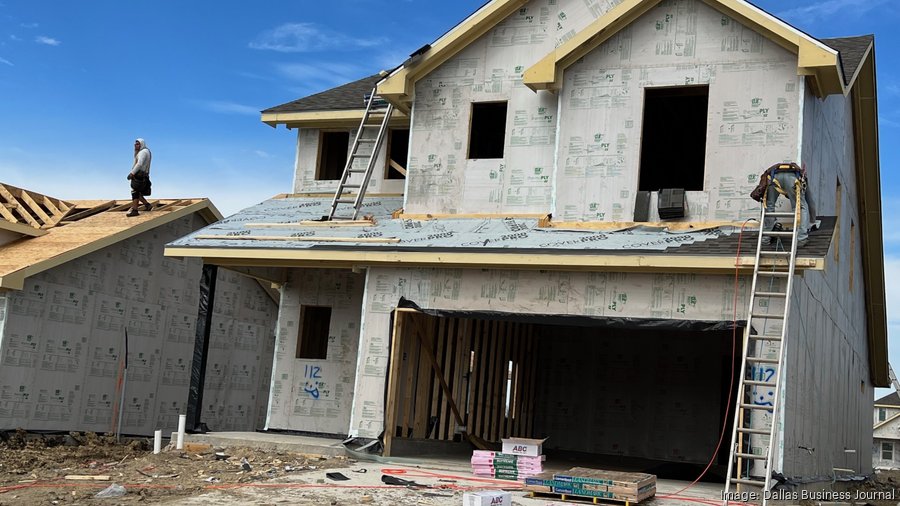
North Texas homebuilding activity cooled slightly in the second quarter compared to last year, as macroeconomic pressures—including persistent mortgage rates and international conflicts—tempered the market. Despite these headwinds, new data from Dallas-based research firm Residential Strategies Inc. (RSI) indicates that the market remains remarkably stable.
The second quarter, spanning April through June, typically marks the strongest season for new home construction. Ted Wilson, principal at RSI, emphasized the importance of context when evaluating this quarter’s performance.
“If you had told me last fall that we were entering the spring market with mortgage rates climbing past 6.5% amidst an active war with Iran, I would have been highly anxious about the outcome,” Wilson noted. “All things considered, I’ll take it. The past six months have delivered a perfectly acceptable market.”
While builders generally hit their sales targets, profit margins remain squeezed. Local homebuilders initiated construction on 11,290 units during the quarter. While this edges out the 11,149 starts from the first quarter, it represents a 6.5% decline from the same period last year. Total starts over the last four quarters dropped to 39,962 units, falling 11.7% year-over-year.
Meanwhile, quarterly closings dipped 7.6% annually to 11,386 homes, bringing the annual closing pace to 42,887 units. By contrast, the pre-owned market held steady; the Texas A&M University Texas Real Estate Research Center reported 91,864 existing home sales for the 12-month period ending in May.
Employment Growth Offsets Pressure from High Mortgage Rates
The housing market continues to navigate its two primary drivers: job growth and borrowing costs. Mortgage rates hovered between 6.23% and 6.53% throughout the quarter, with Freddie Mac pegging the 30-year fixed rate at 6.49% as of July 9.
Rates escalated in March as geopolitical conflict in Iran pushed up the 10-year Treasury bond yield, fueled by inflation anxieties and rising oil prices. However, Wilson observed that buyers have accepted that lower rates are not coming anytime soon, prompting many to move forward with purchases anyway.
On the demand side, corporate relocations keep Texas employment on an upward trajectory. The RSI report highlighted Samsung moving its headquarters to Plano and indications that Morgan Stanley will expand its local presence. The Texas Workforce Commission reported that the state added 24,700 jobs in the 12 months ending in May 2026. RSI projects that overall job growth in 2026 will outpace 2025, even if it falls short of previous record-setting years.
Builders Clear Speculative Homes Amid Record Lot Surpluses
A primary bright spot for the quarter was a sharp reduction in finished, vacant housing inventory, which plummeted to its lowest level in two years. Unsold available inventory dropped to 9,745 units by the end of June—a decline of 1,413 homes from the prior quarter.
“Builders undertook the painful but necessary task of clearing out excessive levels of unsold inventory during the first half of 2026,” explained Cassie Gibson, executive vice president at RSI. “Eliminating this surplus required heavy discounting, meaning many of these homes closed with minimal profit margins.”
| D-FW Housing Market Metrics (Q2 2026) | Data Highlight | Annual Change |
| Quarterly Single-Family Starts | 11,290 units | ↓ 6.5% |
| Trailing 12-Month Starts | 39,962 units | ↓ 11.7% |
| Quarterly Closings | 11,386 units | ↓ 7.6% |
| Available Vacant Inventory | 9,745 units | Lowest in 2 years |
| Total Developed Lots Available | 111,511 lots | Record high (33.5-month supply) |
While home inventory shrank, the supply of vacant, developed land reached an all-time high. D-FW holds a record 111,511 available home lots, representing a 33.5-month supply. The industry generally considers a 24-month supply to be a balanced market.
Ned Wilson, senior vice president at RSI, noted that builders aggressively expanded land development in 2023 and 2024 when employment gains were stronger and rate cuts seemed imminent. Unfortunately, that surge in land supply has hit the market just as high mortgage rates and moderating job growth have caused consumer demand to pull back.
Build-to-Rent Construction Secures Less Regulation But Faces Lower Profits
The build-to-rent pipeline experienced a sharp pullback, with construction starting on just 688 rental units in the second quarter. Over the past year, institutional rental builds accounted for 3,720 starts, representing 7.6% of the region’s total residential construction.
The sector recently dodged significant regulatory headwinds. The final version of the 21st Century ROAD to Housing Act, which passed into law on Saturday, omitted the stringent restrictions on large institutional investors that had been proposed in earlier drafts. Nevertheless, Ted Wilson noted that policy relief may not trigger an immediate rebound, as the build-to-rent sector faces diminishing profitability and an ongoing downward trend.