
Dallas City Council Rejects Convention Center Redesign, Defending Project Timeline Over Traffic Concerns

Share
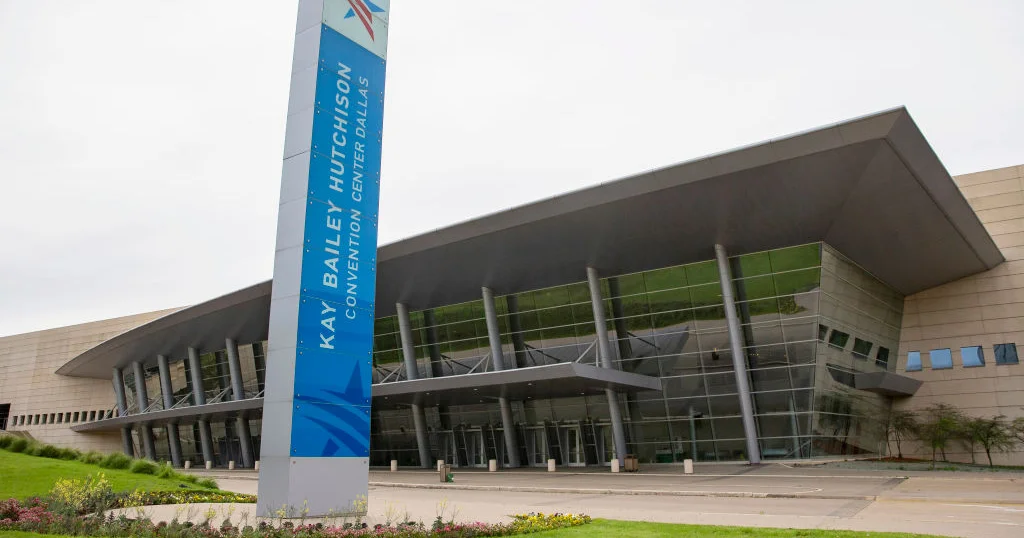
The Dallas City Council voted 9-6 on Wednesday to reject a last-minute redesign proposal for the Kay Bailey Hutchison Convention Center. Council members opted to preserve the current construction schedule and avoid potentially massive financial penalties, despite warnings that the decision could permanently disrupt a vital transit link between Oak Cliff and downtown.
The high-stakes vote concludes a fierce debate over whether to lift the height of the convention center. Elevating the structure would have allowed Jefferson Boulevard to continue running directly underneath the building, preserving a straightforward route into the city center for south-side commuters.
Instead, the majority decided that keeping the $3.8 billion megaproject on schedule outweighed the benefits of an expensive architectural overhaul.
Communication Failures and the $500M Cost-Cutting Move
Wednesday’s council session laid bare deep-seated frustrations regarding city staff’s transparency. The traffic bottleneck trace back to a recent cost-saving measure, where officials lowered the convention center’s profile to slash roughly $500 million from the overall budget.
However, lowering the building eliminated the necessary clearance for Jefferson Boulevard—a critical detail that several council members and residents claim was only brought to light during recent transportation committee meetings. Council member Chad West, who championed the redesign alongside North Oak Cliff residents, placed the blame directly on poor municipal communication.
“We are locking in a decision that cannot be undone, one that will reshape Oak Cliff’s connection to downtown for decades to come,” West warned, arguing that city staff created unnecessary community friction by obscuring the traffic consequences.
Balancing Transit Delays Against Economic Fallout
City staff strongly cautioned against reopening the design blueprint. They warned that rewriting the plans at this stage would stall construction, trigger budget overruns, and ultimately threaten the viability of the entire redevelopment.
Furthermore, financial officials noted that any delay to the construction timeline would ripple through Dallas’ broader economy. Pushing back the opening date would postpone vital hotel tax revenues earmarked to fund local arts programs and tourism initiatives.
For Oak Cliff drivers, sticking to the current plan means losing their direct shot into the central business district. Traffic will eventually be rerouted over a new bridge spanning the Union Pacific rail corridor before filtering into downtown streets—a detour critics argue will worsen urban congestion and spike daily commute times.
Community Backlash and Next Steps
The issue drew intense public scrutiny, with 88 speakers addressing the council. The crowd split between residents demanding the city preserve their transit infrastructure and hospitality advocates worried about the economic damage of missing out on major events.
“I am simply asking Dallas to deliver this project on time by keeping negotiations moving and not halting construction,” said Craig Davis, head of the nonprofit responsible for securing city convention bookings. Acknowledging the friction, Mayor Pro Tem Jaime Resendez apologized to the public for letting inaccurate information fester but defended his vote to move forward. He argued that the city can mitigate the community’s traffic concerns without halting the project. “I am not convinced that responding to communication shortcomings with a vote that causes greater economic harm is the wisest path forward,” Resendez stated.
The massive project extends far beyond the convention floor, encompassing an expanded center, a new deck park, and extensive renovations to both Memorial Auditorium and the Black Academy of Arts and Letters. To address the looming traffic issues created by the vote, the City Council approved the immediate hiring of an independent transportation consultant to find alternative solutions for the area’s upcoming traffic challenges.