
Frisco Mayoral Runoff Set After Outsider Candidates Defeat Former Council Members

Share
Frisco’s mayoral race has entered a contentious new phase after two political outsiders defeated former City Council members to secure spots in the June 13 runoff election.
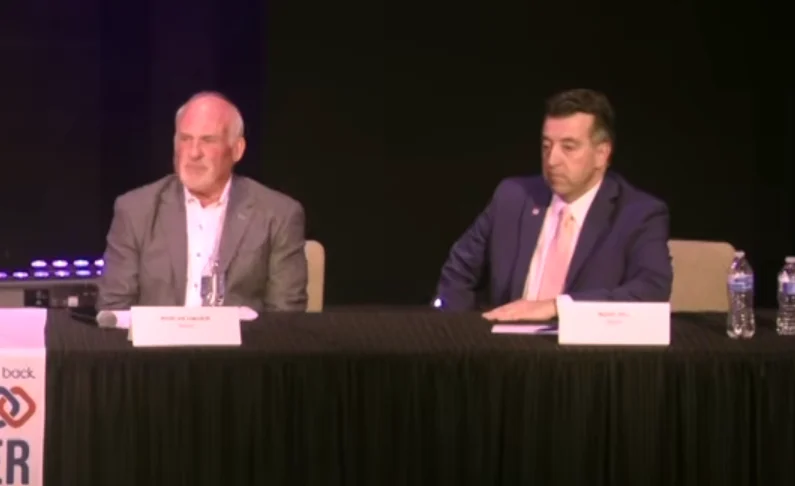
Outgoing Frisco ISD trustee Mark Hill and retired construction business owner Rod Vilhauer emerged as the top two candidates in the crowded race, advancing ahead of longtime council figures John Keating and Shona Sowell. Their success reflected growing frustration among some voters with Frisco’s political establishment, though the two candidates appealed to that sentiment in sharply different ways. Hill campaigned on a message of unity and community inclusion, while Vilhauer drew attention with inflammatory rhetoric surrounding immigration, Islam, and concerns about Frisco’s changing demographics.
The election outcome transformed what is typically a local discussion about development and city growth into a broader cultural and political battle in one of North Texas’ fastest-growing cities.
Tensions Over Diversity Shaped the Race
The runoff follows months of heightened political tension in Frisco, including controversial demonstrations at City Hall where activists warned of an alleged “Indian takeover” and accused immigrants of widespread H-1B visa fraud. Neither Hill nor Vilhauer secured enough votes to avoid a runoff. Hill finished first with approximately 34% of the vote, campaigning under the slogan “Unite Frisco” and emphasizing that Indian residents are an important part of the city’s identity. Vilhauer, who received about 31% of the vote, gained support from some conservative voters after making repeated comments criticizing South Asian immigration and raising concerns about Islamic influence in the city. At his election night gathering, Hill urged supporters and local officials, including outgoing Mayor Jeff Cheney, to intensify campaign efforts ahead of the runoff.
“We need an army,” Hill told supporters.
Vilhauer, meanwhile, used social media to frame Hill as connected to the existing city leadership. Cheney later endorsed Hill following Vilhauer’s controversial remarks.
Social Media Became a Key Campaign Tool
Vilhauer’s campaign relied heavily on short-form social media videos to increase visibility among voters. About two months before the election, Vilhauer connected with Frisco resident Ryan Stewman, who helped launch the candidate’s Facebook campaign strategy. According to Stewman, the campaign’s videos generated roughly 900,000 views and attracted about 2,600 followers. The videos, often informal and filmed behind a desk, were designed to spread organically through Facebook’s algorithm and reach residents unfamiliar with Vilhauer.
“If you’re scrolling reels, you run across random reels all the time,” Stewman said, explaining the strategy behind the campaign’s digital push.
Although Vilhauer also used traditional campaign tactics such as yard signs, mailers, and private events, supporters believe the online strategy played a major role in helping him secure a runoff position. Hill’s campaign also used social media but took a more measured approach. His posts combined professionally produced campaign content with casual updates from polling sites and endorsements from community leaders, including former Frisco Mayor Mike Simpson.
Outsider Appeal Helped Candidates Break Through
Despite living in Frisco since 1986, Vilhauer had little recent political involvement before launching his mayoral bid. His last city role was serving on the planning and zoning commission during the 1990s. Campaign consultant Christopher Zook said the election results showed voters were looking for alternatives to established city leadership.
“Two well-known city council members couldn’t hold off a first-time candidate,” Zook said. Hill also entered the race with relatively limited political experience. He joined the Frisco ISD board in 2023 and co-owns a law firm at Hall Park with Byron Henry, chair of the Collin County GOP. Hill campaign manager Alisa Maso Hess said anti-establishment sentiment likely contributed to the results but cautioned that voter turnout remained low. Roughly 17.9% of registered voters participated in the election.
“A really small percentage of the community is deciding who our next mayor is,” she said. Supporters of Hill argued his message resonated because it challenged the political status quo without inflaming tensions already present in the city. “We’ve been in the news for the wrong reasons,” volunteer Terri Green said. “Mark’s message of unity resonated with voters.”
Campaign Spending and Political Messaging Intensify
Campaign finance records filed in late April showed Vilhauer spent approximately $276,000 during the race, while Hill spent about $208,000. Both campaigns directed more than $100,000 toward Republican-linked political consultants.
Vilhauer’s campaign also embraced controversial anti-Islam messaging. One campaign text included images of women wearing hijabs alongside the message: “Sharia Law has no place in Frisco … the wrong mayor won’t stop it.” He has continued using anti-Islam rhetoric during the runoff campaign and has secured endorsements from the Denton County GOP and two Republican state representatives.
Hill has largely avoided directly attacking Vilhauer, instead encouraging supporters to focus on positive outreach and unity. Several Muslim residents have contributed to or volunteered for Hill’s campaign.
Runoff Expected to Hinge on Voter Turnout
With the June 13 runoff approaching, both campaigns are shifting their attention toward voter mobilization during the summer months, when turnout could decline further.
“The runoff is an entirely new race,” former council member Dan Stricklin said. Hill supporters have already begun organizing neighborhood events and encouraging residents to vote early before summer travel begins.
“It’s going to be tough for both candidates, I fear, to get voters to come back out,” volunteer Terri Green said.