Collin County Housing Prices Surge After COVID, Now Showing Signs of Cooling

Share
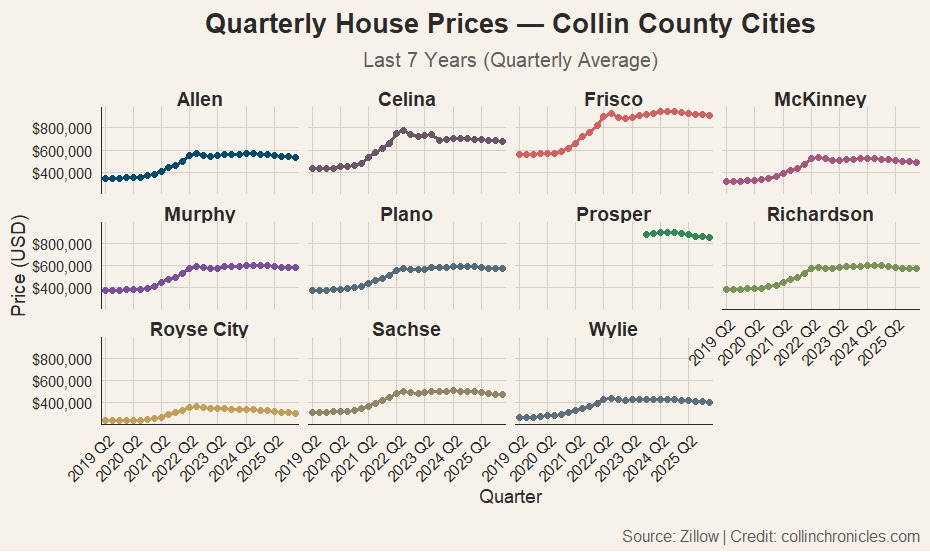
Housing prices across major cities in Collin County surged dramatically in the years following the COVID-19 pandemic, according to quarterly housing data from Zillow covering the last seven years. Cities such as Frisco, McKinney, Allen, Plano, and Murphy experienced particularly sharp increases between 2020 and 2023, reflecting one of the fastest housing market expansions in North Texas. However, recent quarters show signs that the market is stabilizing—and in some areas, beginning to cool.
Pandemic Boom Drives Rapid Price Growth
In the early months of the pandemic in 2020, housing markets initially slowed as uncertainty spread across the economy. But the slowdown proved brief. By late 2020 and 2021, home prices across suburban markets like Collin County began rising rapidly.
One major driver was the sudden shift to remote work. Many households that previously lived in dense urban areas began seeking larger homes with more space, better schools, and suburban lifestyles. Collin County’s cities—particularly Frisco, Plano, and McKinney—became prime destinations for these buyers. During the pandemic years, housing supply fell dramatically while demand surged, leading to bidding wars and homes selling above asking price. In fact, by 2021 the county had less than a one-month supply of homes, far below the six months typically considered a balanced market.
Low mortgage interest rates also fueled the boom. With borrowing costs near historic lows, many buyers rushed to purchase homes, pushing prices upward across the region. At the same time, the U.S. faced a housing shortage that had been building since the 2008 financial crisis, when home construction slowed significantly. Texas alone was estimated to be short more than 300,000 homes by 2021, further tightening supply and accelerating price growth.
Growth Across Collin County Cities
The Zillow data shows consistent price increases across most Collin County cities. Frisco, Prosper, and Celina saw some of the highest average prices, reflecting rapid population growth and new luxury developments.
Cities such as Allen, Plano, and Murphy also saw strong appreciation as buyers sought established neighborhoods close to major employment hubs in the Dallas-Fort Worth metro area. Meanwhile, smaller cities like Royse City, Sachse, and Wylie experienced steady growth as more buyers expanded their search for affordable homes within commuting distance of Dallas.
Prosper’s data begins only in 2023, but even in that short period the city shows some of the highest price levels in the county, reflecting its recent surge in high-end residential development.
Why Prices Are Now Stabilizing
While home prices remain significantly higher than pre-pandemic levels, recent data suggests that growth is slowing and in some cases slightly declining. One key factor is rising mortgage interest rates, which have reduced affordability for many potential buyers.
Another major factor is supply. During the pandemic boom, developers built aggressively across North Texas. Cities such as Celina, Prosper, and Frisco added large numbers of new homes, increasing the inventory available to buyers. With more homes on the market and fewer buyers able to afford them, prices have started to soften in some areas. In fact, analysts estimate Collin County home prices declined about 4.6% year-over-year as supply began to outpace demand.
Higher home prices relative to local incomes are also reducing demand. When homes become too expensive compared with wages, the pool of qualified buyers shrinks, causing markets to cool.
What the Future May Hold
Despite the recent slowdown, most experts expect Collin County’s housing market to remain strong over the long term. The region continues to benefit from strong job growth, a growing population, and ongoing migration into North Texas. Major employers and technology firms continue expanding in the Dallas-Fort Worth area, attracting new residents each year.
Immigration and domestic migration also play a significant role. As more workers relocate to Texas for job opportunities and lower taxes, housing demand in suburban counties like Collin is likely to remain steady.
However, the rapid price growth seen during the pandemic is unlikely to repeat in the near future. Instead, housing analysts expect a period of slower, more sustainable price growth as the market balances supply and demand.
In short, Collin County’s housing market appears to be transitioning—from the explosive growth of the pandemic years to a more stable and mature phase shaped by economic fundamentals, population growth, and the evolving regional economy.