

McKinney City Council Faces Recall Campaign Following Controversial Mosque Approval

Share
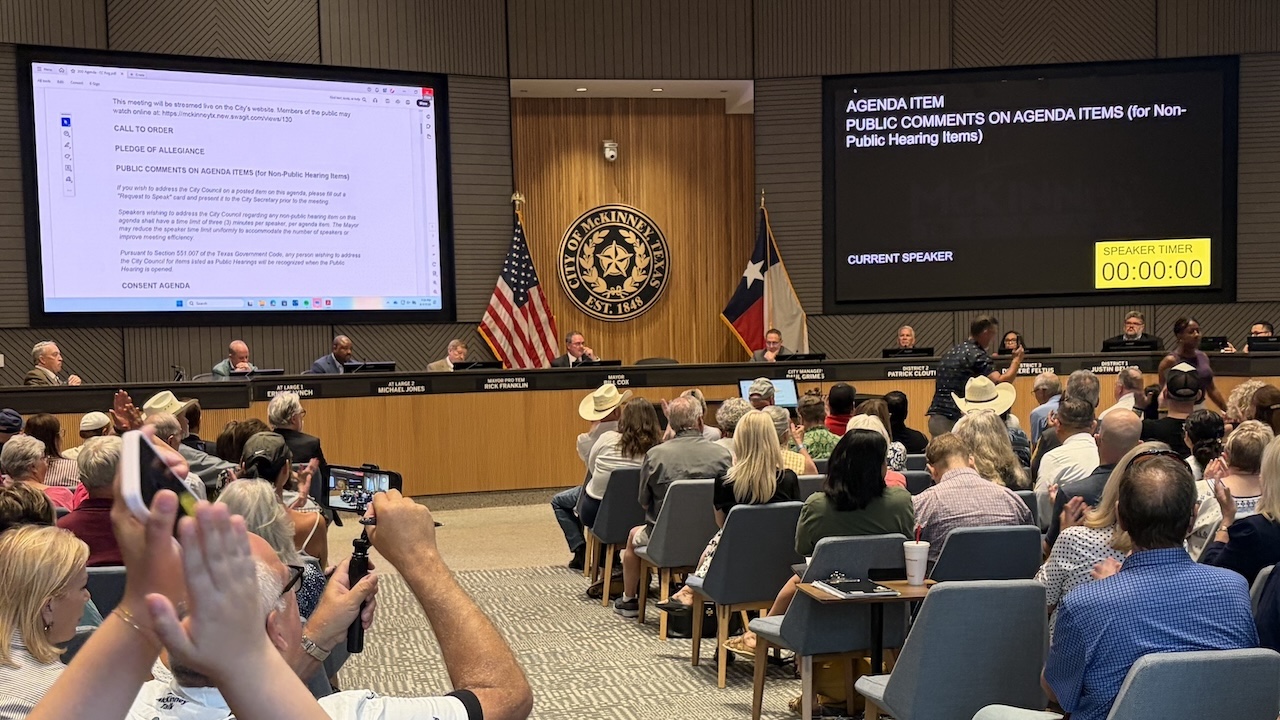
A citizen-led campaign is underway to unseat majority leadership on the McKinney City Council after officials granted site plan approval for a new Islamic center. The unanimous vote—which followed hours of public testimony—sparked immediate backlash inside council chambers and triggered a formal petition drive targeting four municipal leaders.
The recall effort seeks roughly 5,800 verified signatures from registered voters by the September 26 deadline set by the city charter. If certified, the initiative would force a special election for Mayor Bill Cox alongside council members Justin Beller, Dr. Geré Feltus, and Ernest Lynch. The council’s remaining three seats will appear on the regular municipal ballot next year.
Broader Governance Concerns
Petition organizers argue that public frustration extends beyond a single zoning decision. According to lead organizer John Aselton, the campaign reflects broader dissatisfaction with municipal leadership, citing a persistent disconnect between elected officials and local residents.
Longtime resident Tom Michero echoed those concerns, pointing to council decisions regarding commercial airport expansion, taxpayer funding for a local amphitheater, and the U.S. 380 bypass alignment as ongoing points of contention.
High-profile figures have also weighed in. U.S. Representative Keith Self publicly backed the recall drive, sharing footage of himself signing the petition and criticizing council responsiveness.
While some residents question whether a recall can legally alter the project’s approval, others describe the recent council session as a galvanizing moment for civic mobilization across Collin County.
Legal Obligations and Community Reaction
City leadership maintains that the approval rested entirely on established land-use law. Officials noted that the McKinney Islamic Association’s submission—which includes a sanctuary, gymnasium, and educational facility—fully satisfied municipal zoning standards, including traffic flow, parking capacity, and building height. Under federal and state property law, municipalities cannot reject compliant site plans based on religious affiliation.
Mayor Cox stated that the council acted strictly within its legal obligations. Councilman Beller reaffirmed his commitment to his constitutional oath, noting that elected leaders must adhere to statutory requirements regardless of public pressure. Council members Feltus and Lynch did not provide statements.
Yasser Wardany, president of the McKinney Islamic Association, commended the council for following objective legal criteria during a contentious public process.
Meanwhile, local Muslim residents voiced deep concern over the ensuing political fallout. Community members, including longtime resident Hind Jarrah, expressed disappointment over the divisive atmosphere surrounding the project. Others, such as resident Samar Waqar, publicly urged voters against supporting the recall, cautioning that penalizing elected officials for upholding administrative law sets a destabilizing precedent for local governance.