

Texas Winter Forecast: When Snow and Sleet Could Hit the Lone Star State

Share
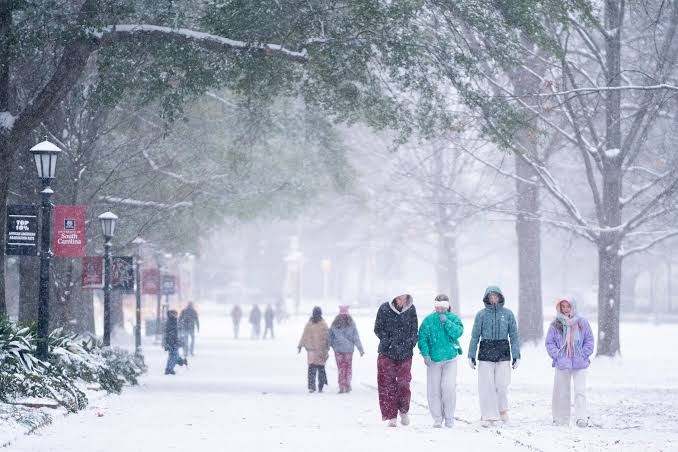
As South Texas endures peak summer heat, many residents are eager for cooler weather. In San Antonio, temperatures reached at least 98 degrees on 12 of the past 13 days, with heat index values frequently climbing past 105 degrees. Relief may eventually arrive as a wetter-than-average winter, according to the newly released Farmers’ Almanac long-range forecast.
The annual publication, which has issued predictions since 1818, reports that a strengthening El Niño pattern will fuel an active southern storm track this season. The almanac advises readers to keep snow shovels, rain boots, and ice scrapers handy for a winter packed with “snow, sleet, and surprises.”
Timeline for Potential Snowfall in Texas
The Farmers’ Almanac projects above-normal precipitation across the South-Central region, which encompasses Texas, Oklahoma, and Arkansas. When periodic surges of Arctic air collide with abundant Gulf moisture, severe winter weather could follow.
The outlook highlights several key windows where snowfall or sleet is possible:
- Dec. 20–23: Cold temperatures accompanied by light snow flurries.
- Jan. 1–7: Seasonably mild overall, but with snow and sleet in northern sections.
- Feb. 8–11: Brief cold snaps paired with snow or sleet in northern areas.
- Feb. 20–23: Cooler conditions north and mild conditions south, with additional snow or sleet in northern sections.
The forecast points toward heightened snowfall chances for North Texas and surrounding states, while southern regions—including San Antonio—are more likely to see rain rather than significant wintry accumulation.
How Accurate Is the Farmers’ Almanac?
The Farmers’ Almanac relies on a 200-year-old proprietary formula evaluating sunspots, planetary alignments, and lunar cycles. Although the publisher now incorporates modern satellite data and atmospheric modeling—claiming an accuracy rate between 80% and 85%—independent research offers a different perspective. A University of Illinois study revealed that the publication’s temperature and precipitation predictions are accurate roughly 51% to 52% of the time, performing barely better than a random coin toss.
El Niño Patterns Support Higher Snow Potential
Despite questions surrounding the almanac’s methods, meteorologists agree that El Niño significantly influences Texas winter weather. During strong El Niño events, the Pacific jet stream shifts southward, directing frequent cold fronts and storm systems across the state.
Historical weather records support this trend. During El Niño winters, San Antonio averages temperatures 1.4 degrees cooler than normal and experiences a 58% increase in rainfall. Furthermore, measurable snowfall has occurred in 44% of strong El Niño winters in San Antonio since 1950, compared to just 20% in non-El Niño years. While a snowy winter is never guaranteed in Texas, broader climate patterns indicate a solid chance for wintry weather ahead.