

Former Dallas Mayors Offer Different Visions for Keeping the City Competitive

Share
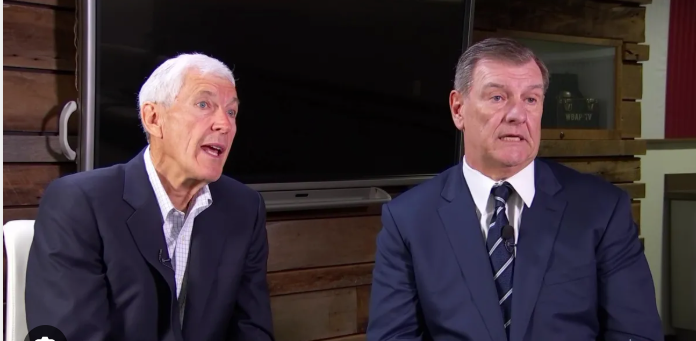
As Dallas confronts growing competition from neighboring North Texas cities, three former mayors agree the city can remain a regional leader — but each believes a different issue must be addressed to secure its future.
Former mayors Tom Leppert, Mike Rawlings, and Laura Miller recently shared their perspectives on what Dallas must do to maintain its position as the region’s economic and cultural center. Their comments come after a challenging week for the city, marked by several high-profile developments, including the Dallas Mavericks’ planned relocation from downtown to North Dallas, the Dallas Stars’ interest in building a new arena in Plano, and the closure of Neiman Marcus’ longtime downtown flagship store.
While all three remain optimistic about Dallas’ prospects, they point to leadership, accountability, and governance as critical areas requiring attention.
Tom Leppert: Dallas Must Act Faster and Deliver Results
Tom Leppert, who served as mayor from 2007 to 2011, said Dallas must become more competitive by improving its ability to execute plans and make timely decisions. According to Leppert, businesses and residents now have more choices across North Texas, making it essential for Dallas to respond quickly and effectively.
“Dallas has to compete,” Leppert said. “To compete, you’ve got to perform.”
He warned that delays, uncertainty, and a failure to follow through on priorities can drive investment and opportunities elsewhere.
“You have to have the leadership, and you can’t delay things,” he said. “Businesses and individuals are not going to accept this idea that you can put things off time and time again.” Leppert believes city leaders should clearly define priorities, take decisive action, and focus on producing measurable results. “Leadership needs to assert itself, define what’s important for the city, and get it done,” he said.
Mike Rawlings: Accountability Is the Missing Ingredient
Mike Rawlings, mayor from 2011 to 2019, argued that Dallas’ biggest challenge is not a shortage of assets or opportunities but a lack of accountability.He emphasized the importance of downtown Dallas, noting that it generates roughly half of the city’s property tax value. Rawlings described the area’s recent struggles as both an economic concern and an emotional issue for residents. Despite recent setbacks, he said city leaders should be able to work together and focus on the city’s long-term interests.“Emotional as it may be, they can all get aligned to do what’s right,” Rawlings said.
He warned that when leaders fail to focus on core responsibilities, businesses and investors can lose confidence in the city’s direction. Rawlings said Dallas remains capable of competing with any city in North Texas if officials prioritize the needs of businesses, investors, and major sports organizations.“Let’s not jump to the shiny object until we do the basics first,” he said.
He also criticized what he views as an outsized focus on small but vocal groups, arguing that elected officials should concentrate on policies and decisions that support broader economic growth.“A citizen needs to be voting for somebody that can make things happen,” he said.
Laura Miller: Governance Reform Is Needed
Laura Miller, who served as mayor from 2002 to 2007, believes Dallas’ challenges stem from its system of government. Miller, a former Dallas City Council member and former reporter for The Dallas Morning News, recently argued in a D Magazine column that the city’s council-manager form of government is no longer effective.
Under the current structure, the mayor is elected citywide, 14 council members represent individual districts, and a city manager hired by the council oversees daily operations. Miller contends that too much authority is concentrated in the city manager’s office and senior staff, while elected officials often struggle to establish a unified vision for the city. She also linked governance concerns to issues raised by AT&T when the company decided to move its headquarters operations from downtown Dallas.“We need wholesale change,” Miller said.
She advocates for a strong-mayor system that would give the mayor direct authority over city operations, making it easier for voters to identify who is responsible for the city’s performance and direction. Miller also called for a return to what she described as civic-minded leadership focused on long-term community benefits rather than individual projects or financial interests. “Another reason the train is off the rails in Dallas is the lack of what made us a great city to begin with: selfless business leadership,” she said.
Different Solutions, Shared Concern
Although Leppert, Rawlings, and Miller disagree on the primary cause of Dallas’ challenges, all three share a common belief: the city remains well-positioned to thrive but must address key leadership and governance issues to stay ahead of increasingly competitive neighboring cities.
As North Texas continues to attract new businesses, investments, and major development projects, the debate over Dallas’ future direction is likely to remain at the center of civic and political discussions.